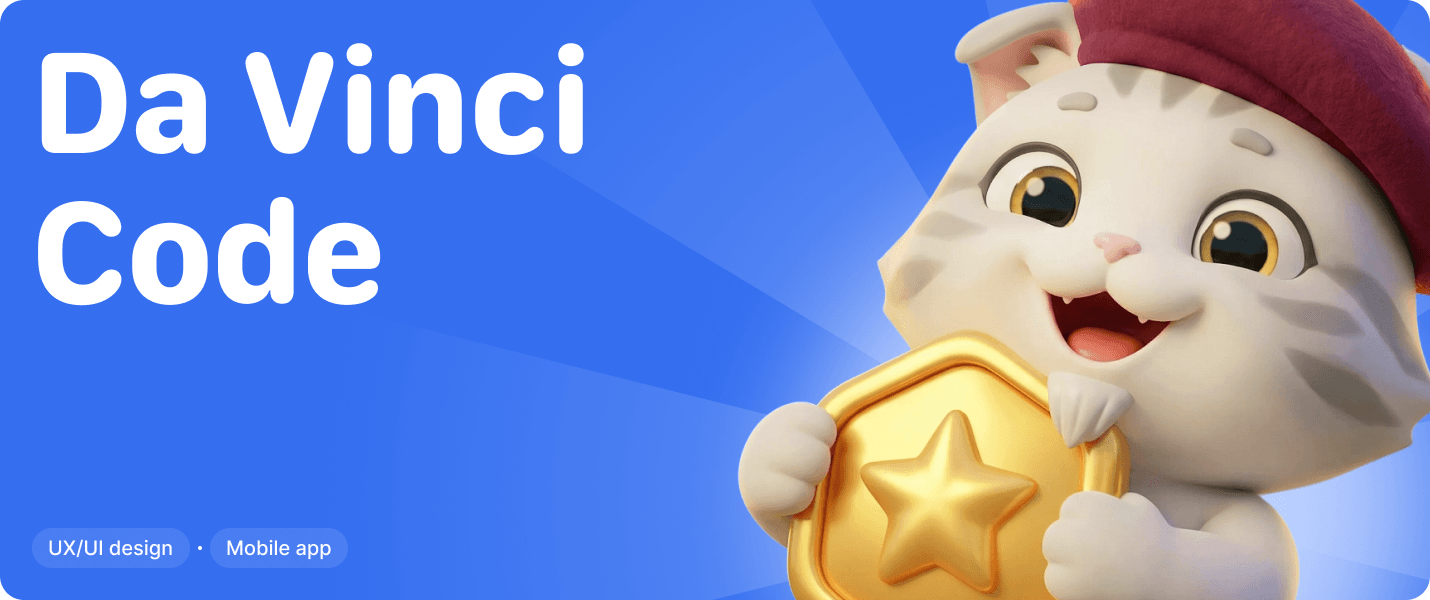
Da Vinci Code
Gamified learning app that helps children build motivation, discipline, and visible learning progress.
Overview
Da Vinci Code is a mobile educational product designed to make learning feel more engaging, personal, and rewarding for children.
The product transforms academic progress into a gamified experience where every student has a digital profile, a personal avatar, a progress map, achievements, virtual currency, and a customizable room. Instead of focusing only on grades, the system rewards effort, consistency, activity, and personal growth.
Role
I worked on this project as a Product Designer in collaboration with a Character Designer, who created the main characters and visual assets. My role covered product structure, UX logic, user flows, mobile UI, design system, gamification mechanics, and the overall experience architecture.
The challenge
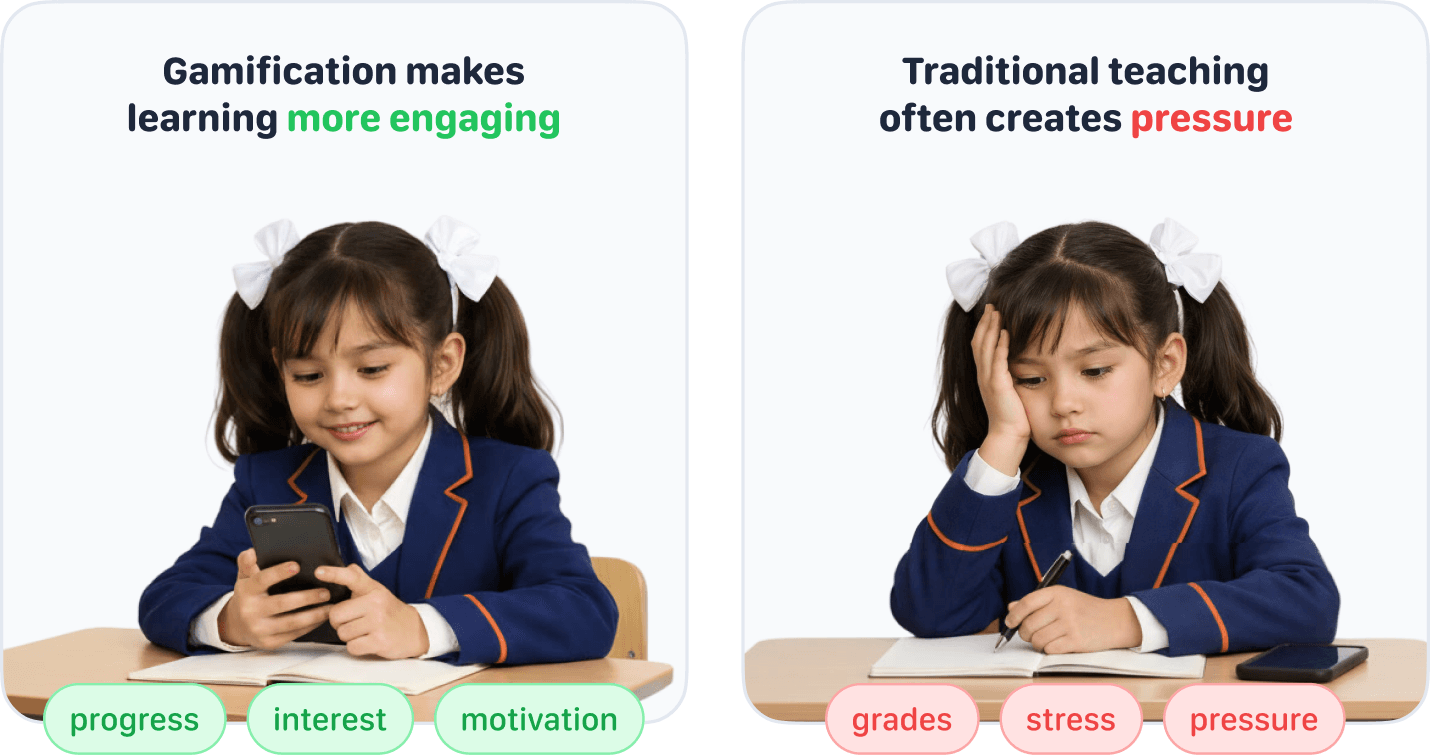
The challenge was to design a product that could help children feel more motivated to learn by turning educational progress into a clear, playful, and rewarding experience. The core product question was: How can we make children want to learn by making their progress visible, rewarding, and emotionally engaging?
Target audience
The main user is a child or student who interacts with the mobile app to track progress, receive rewards, and customize their digital identity.
Also parents, who want their child to stay motivated and develop healthy learning habits.

User context
The app is used around the child's learning routine: after lessons, during the week, at the end of a semester, after completing activities, or when receiving progress updates.
Loading and first experience
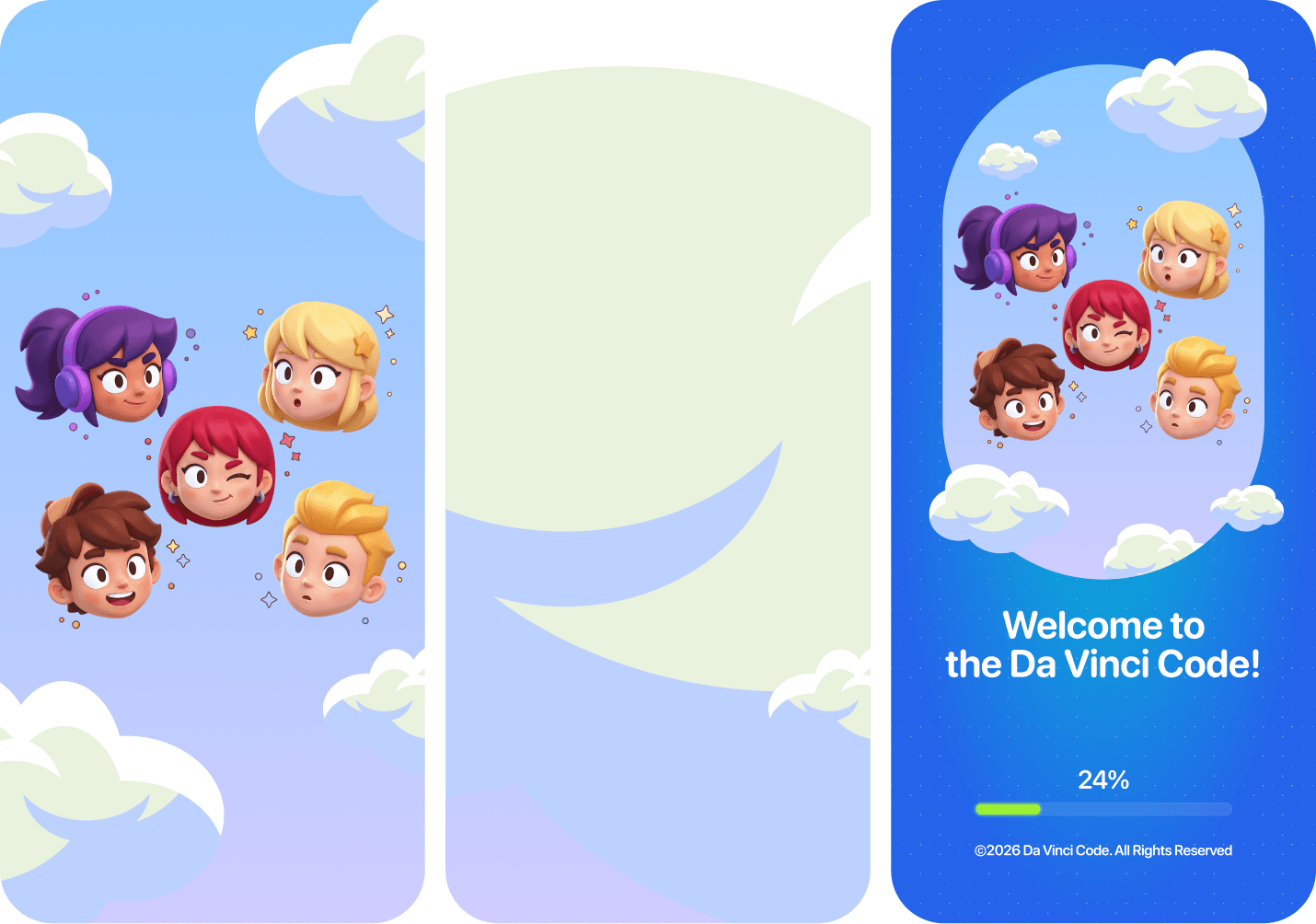
The app starts with an animated loading experience built around characters and soft motion. The goal was to make the product feel alive from the first moment instead of showing a generic loading screen.
The loading flow uses characters, cloud transitions, and a progress state to create continuity before the user enters the app.
Authorization
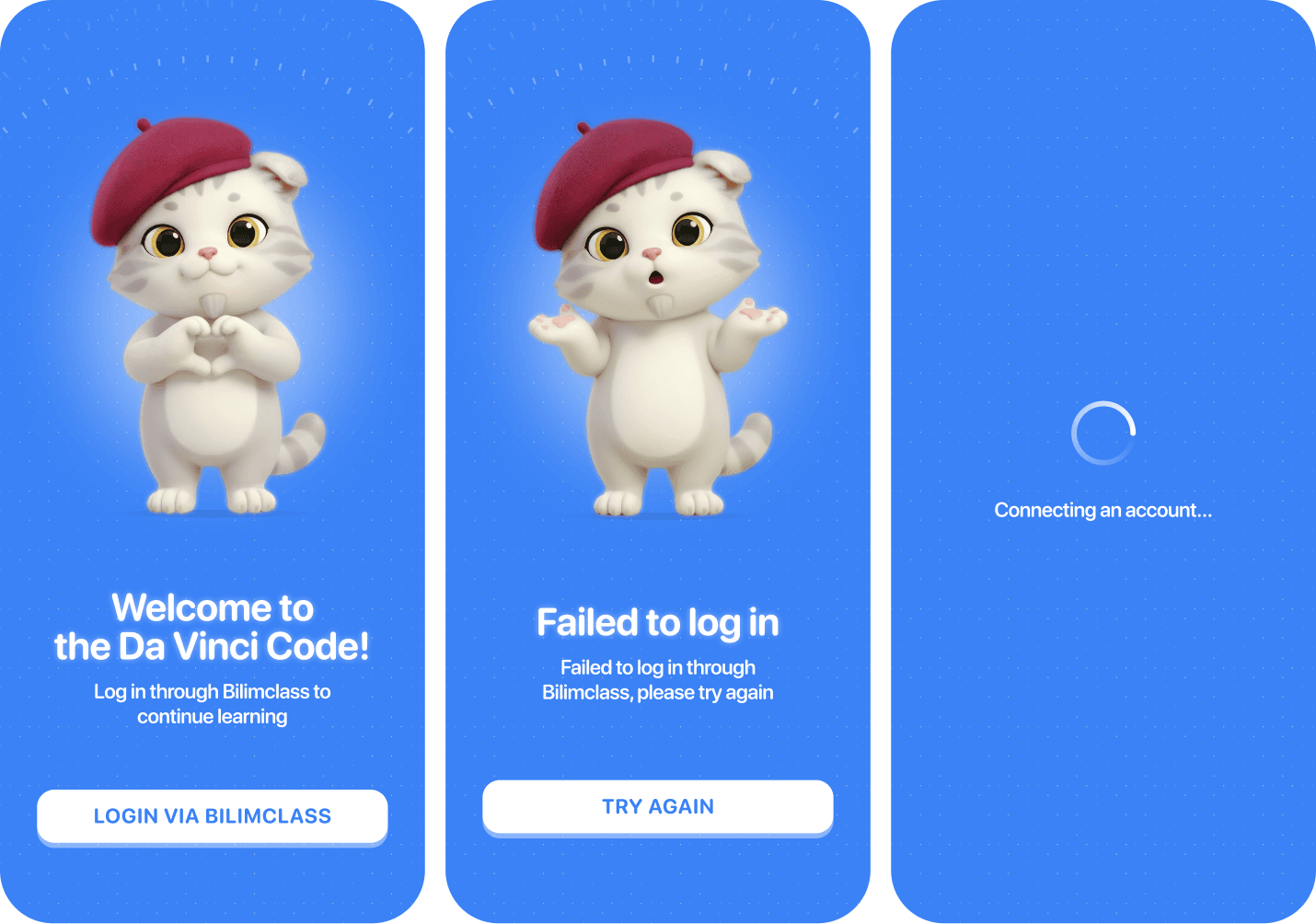
The authorization flow was designed around SSO logic, allowing the user to enter the product through an existing education ecosystem without unnecessary friction.
The goal was to keep access simple and focused, especially for younger users.
Subject list
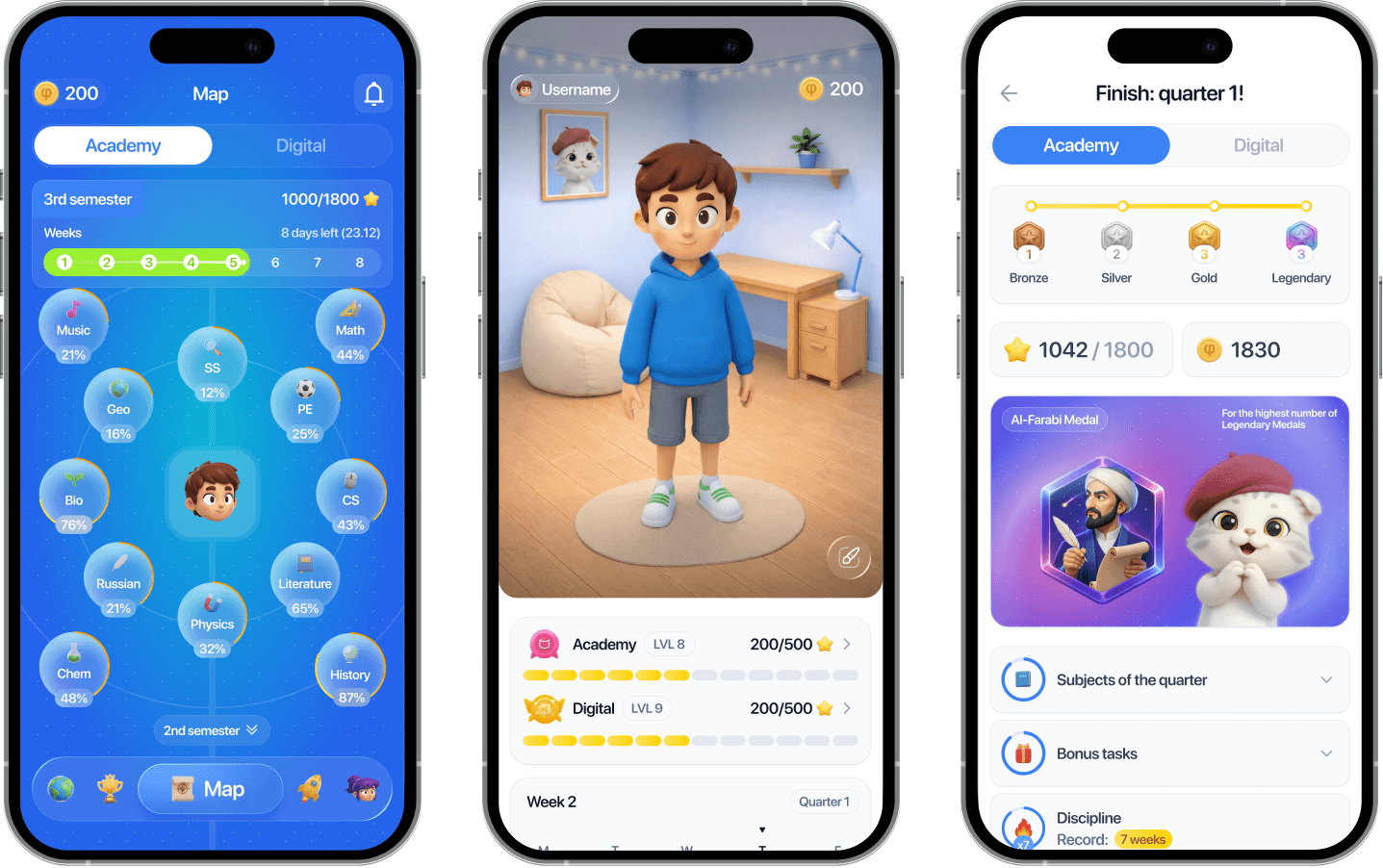
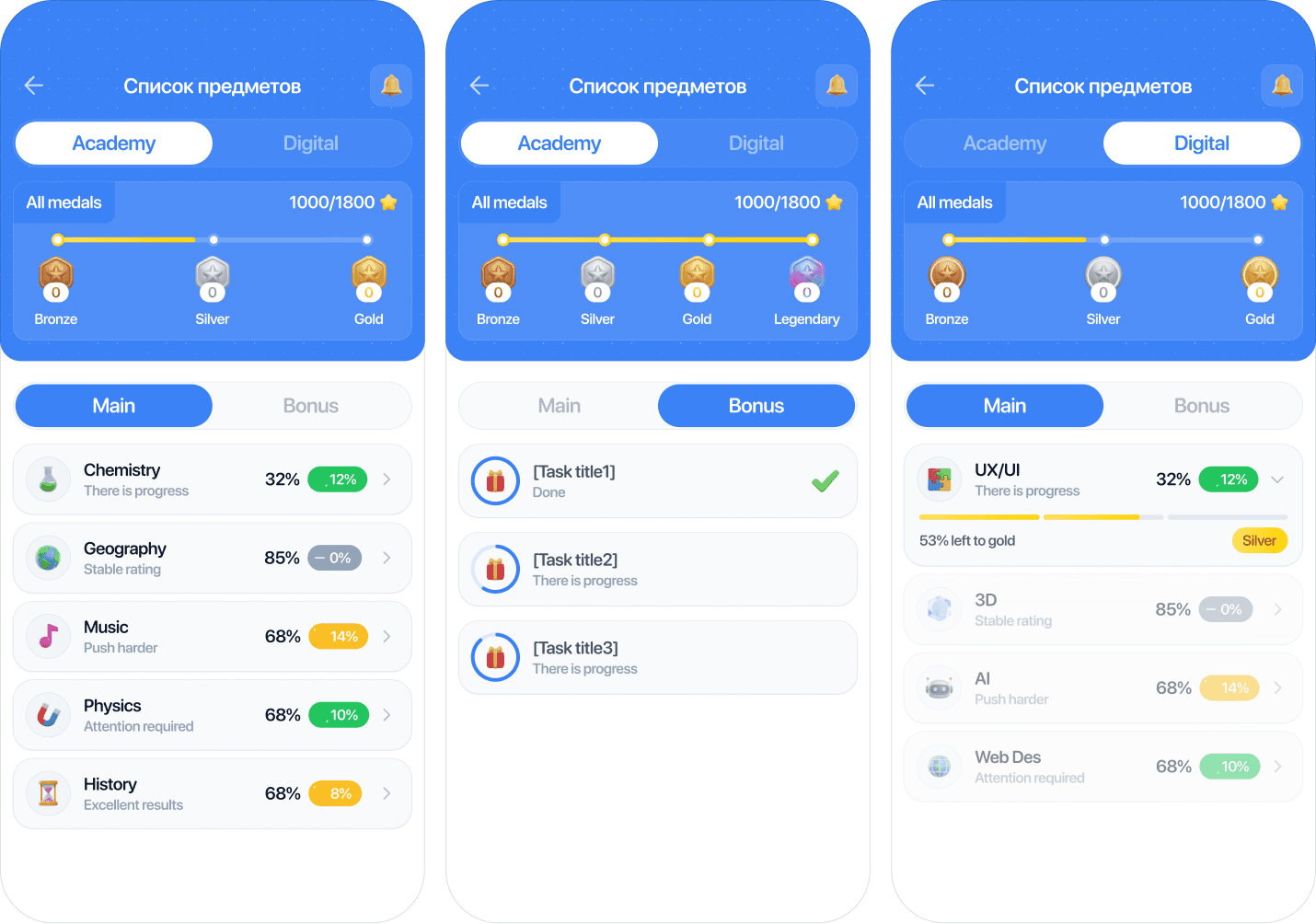
The subject list gives the child a clear overview of all academic areas and their current progress.
Instead of showing only static grades, the interface presents subjects as progress-based items. This helps the student understand where they are growing and what areas still need attention.
Progress map
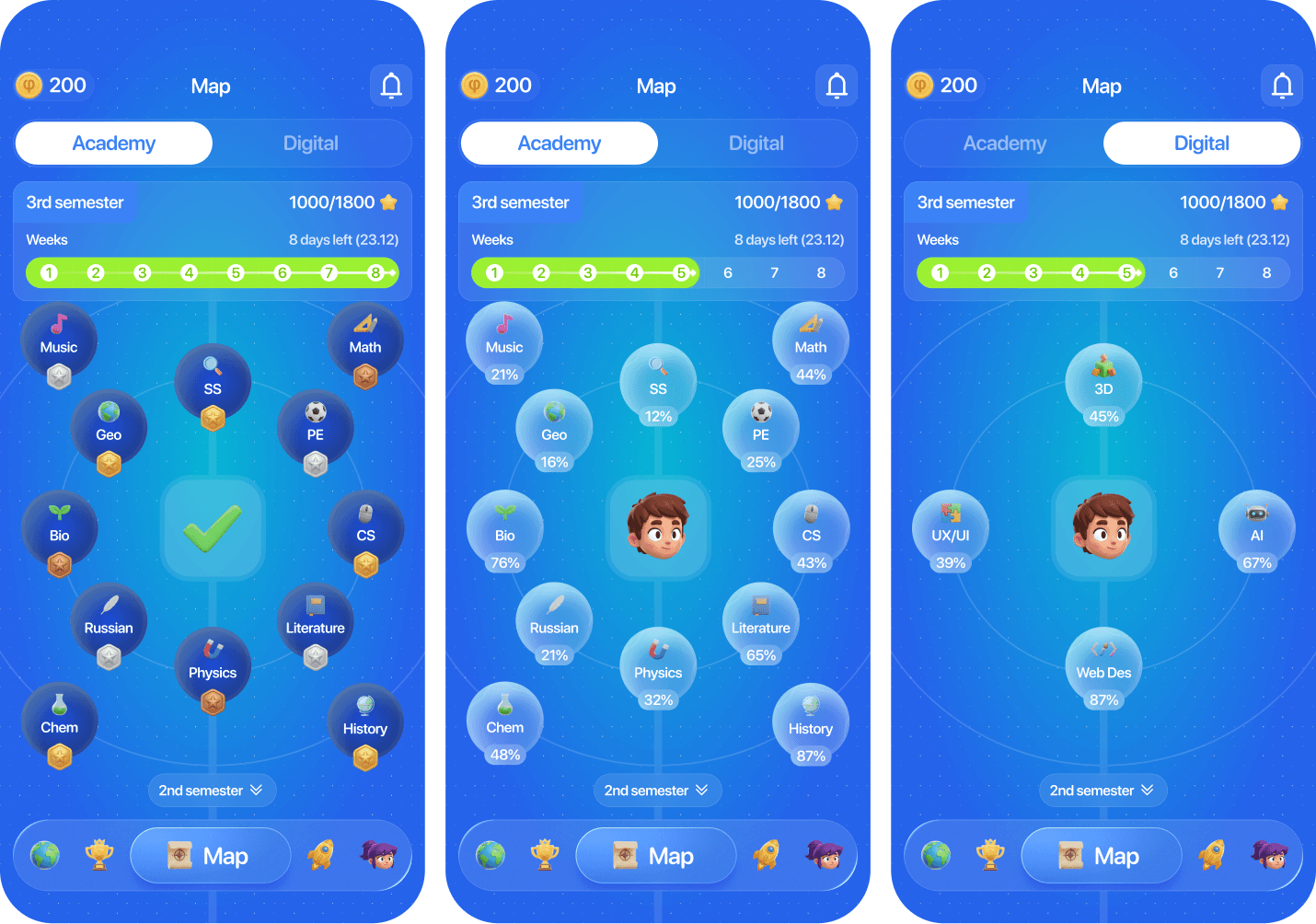
The map works as one of the main motivational screens.
It visualizes the child's learning journey across weeks, semesters, and progress stages. The map gives a sense of direction: where the student is now, what has been completed, and what comes next. This screen turns abstract academic progress into a more tangible journey.
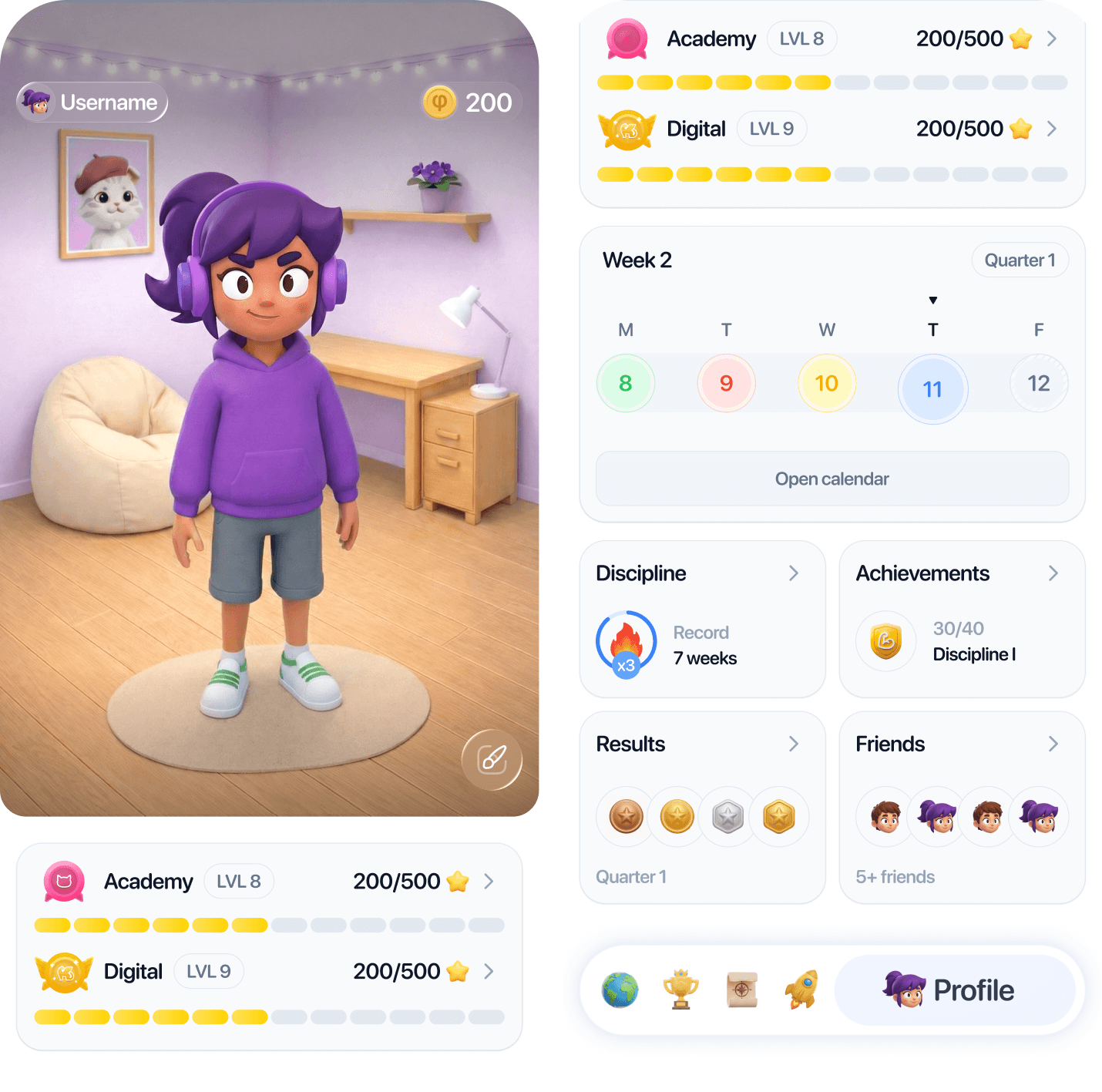
Profile
The profile is the child's personal learning identity.
It includes level, experience, achievements, medals, subject progress, and personal development indicators. The profile is not just a settings page; it is a representation of the child's growth.
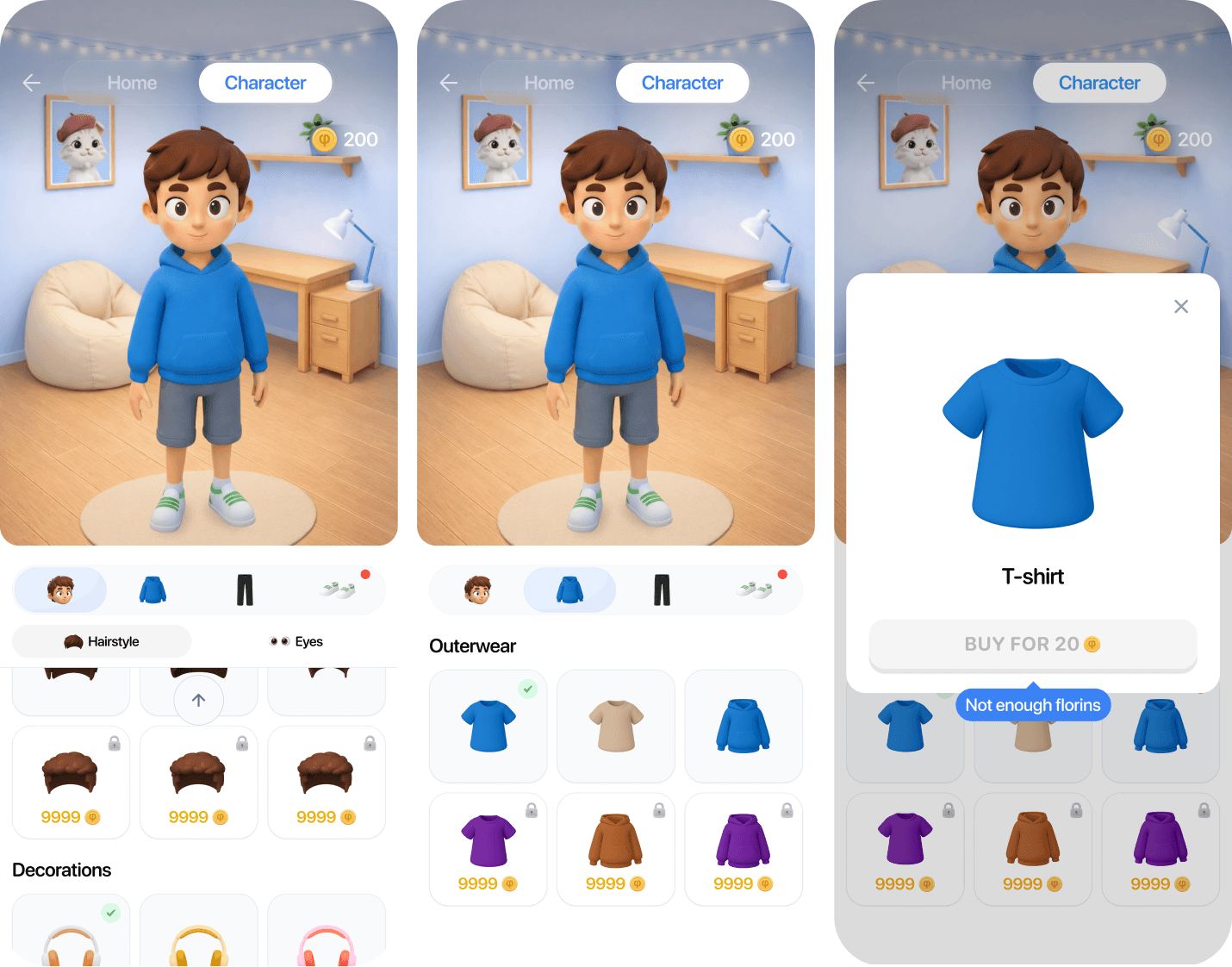
Character customization
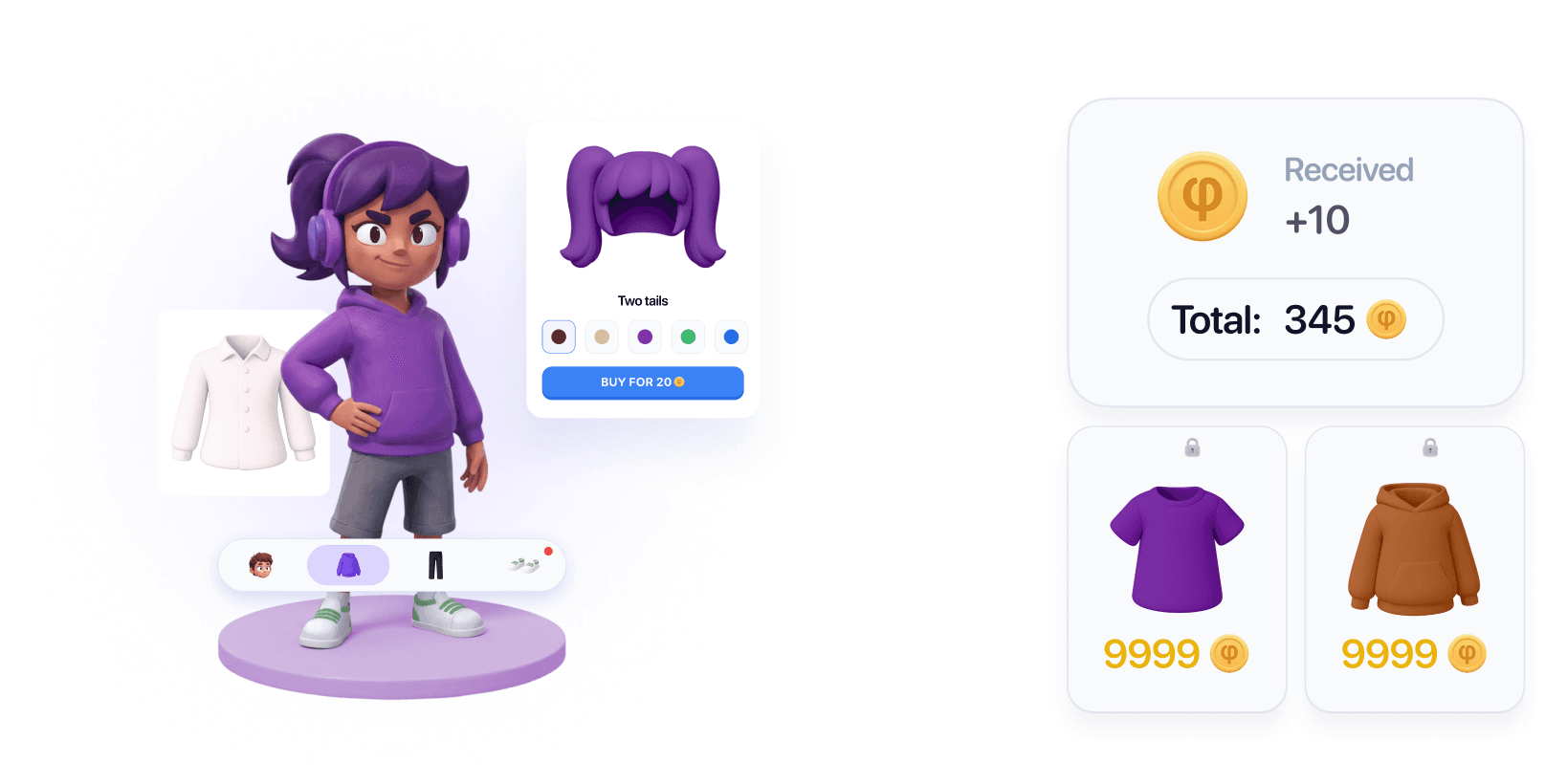
The customization system includes different categories such as hair, clothing, skin, face, accessories, outfits, and other visual elements.
This gives children a reason to keep earning rewards and returning to the app.
The customization experience also connects the educational loop with emotional ownership: the more the child progresses, the more they can personalize their world.
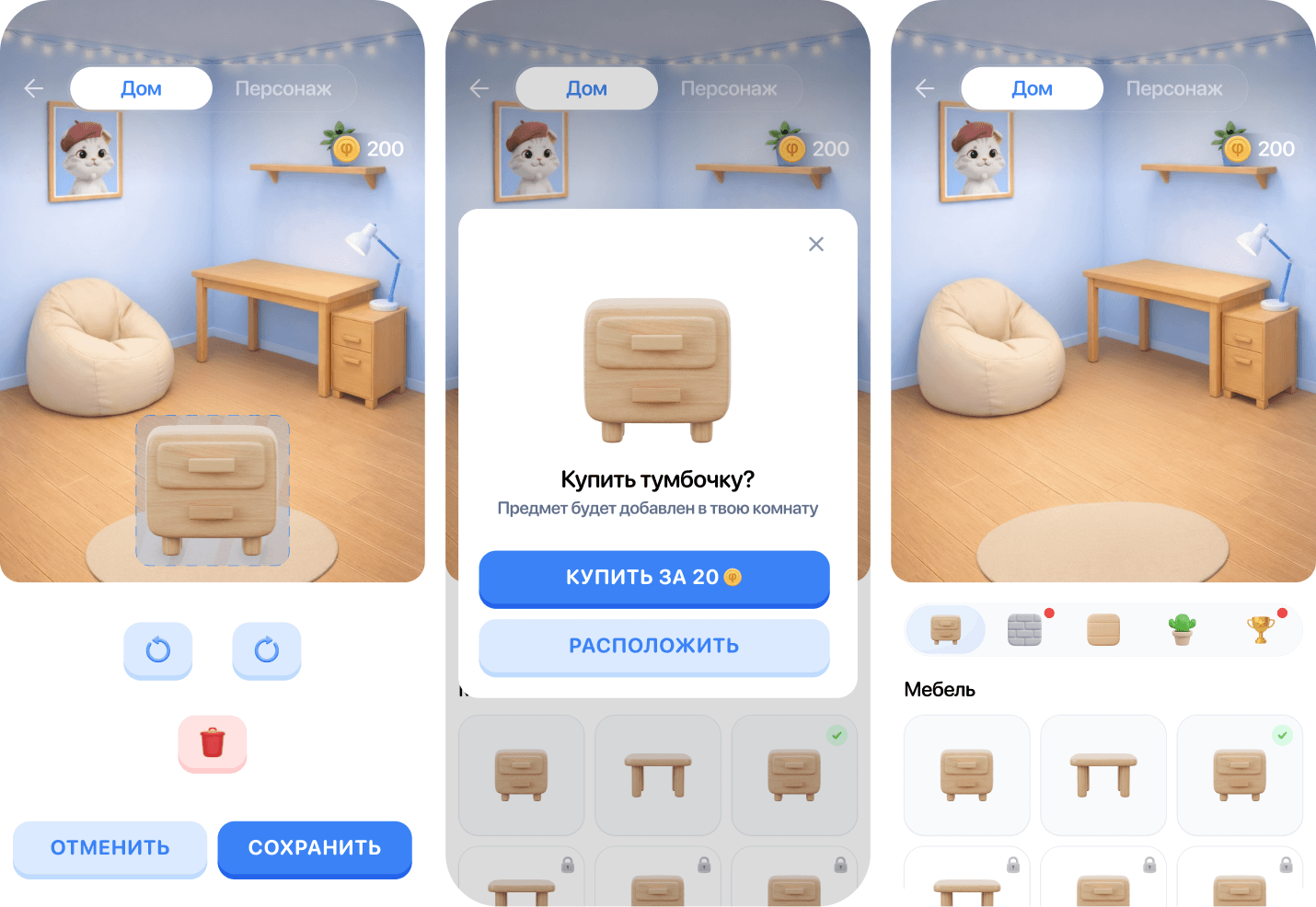
Virtual room
The child also has a personal virtual room.
The room creates a second layer of ownership beyond the avatar. It can reflect progress, achievements, and long-term participation.
The room is designed as a space that can evolve over time, preserve history, and potentially support visits from friends or social interactions.
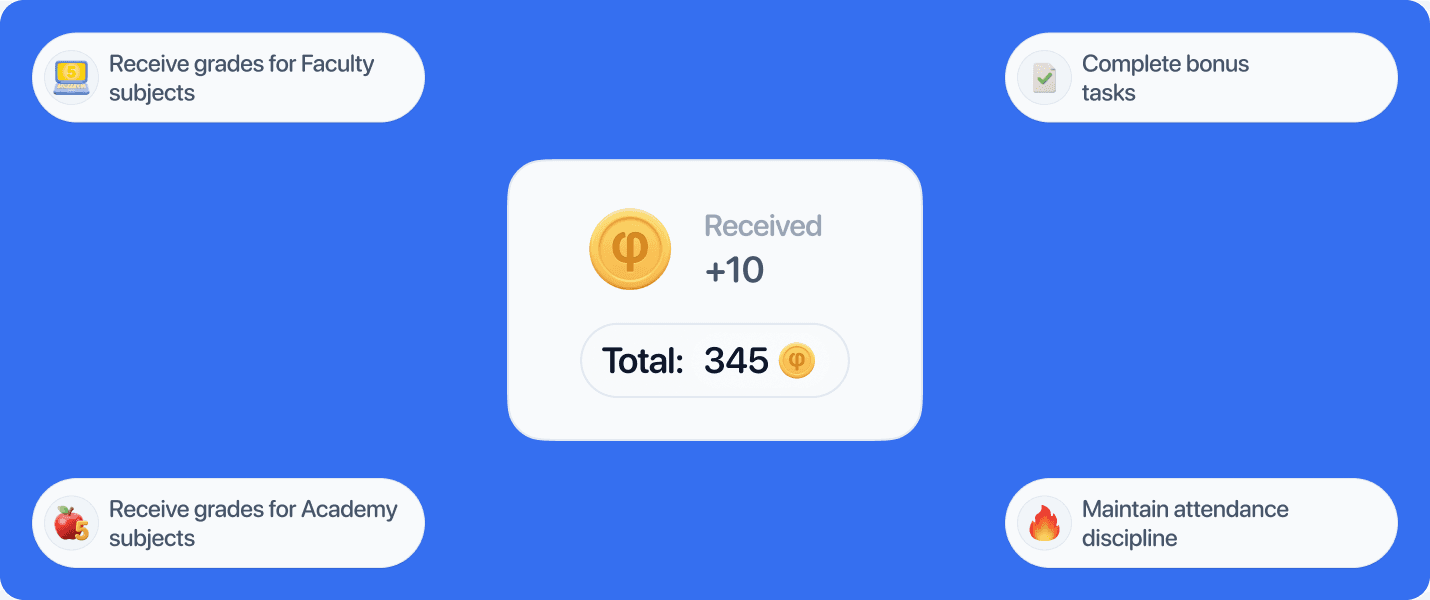
Florins
Florins are the internal currency of the product.
They are earned through activity, progress, and educational effort. The purpose of Florins is to make positive learning behavior feel immediately rewarding.
The system intentionally avoids rewarding only perfect grades. It focuses on consistency and progress.
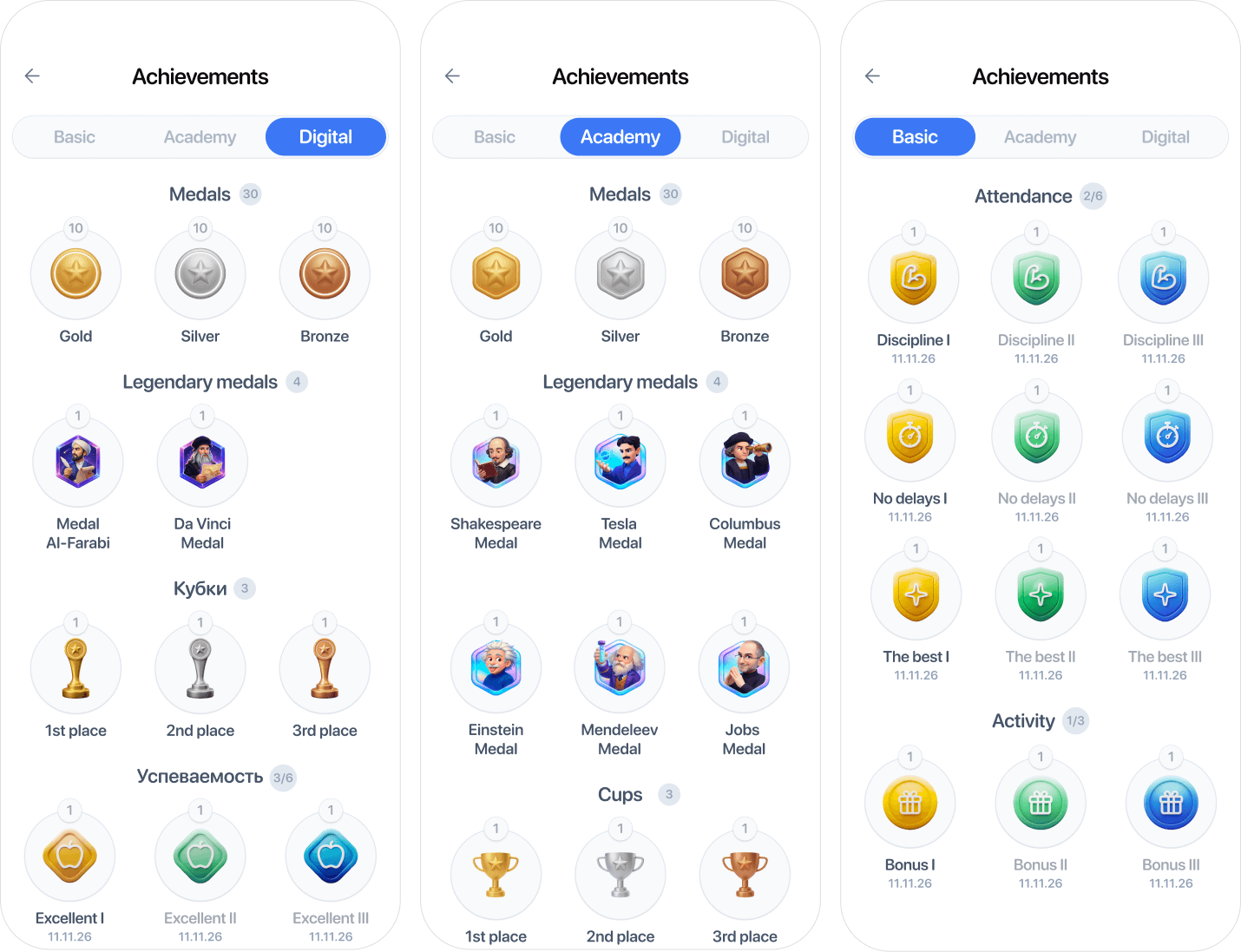
Achievements and medals
Achievements provide milestone-based recognition.
The product includes achievement sections, achievement detail screens, medal levels, and special reward moments. These mechanics help children understand their progress beyond daily tasks.
The achievement system supports both short-term motivation and long-term development.
Congratulations overlay
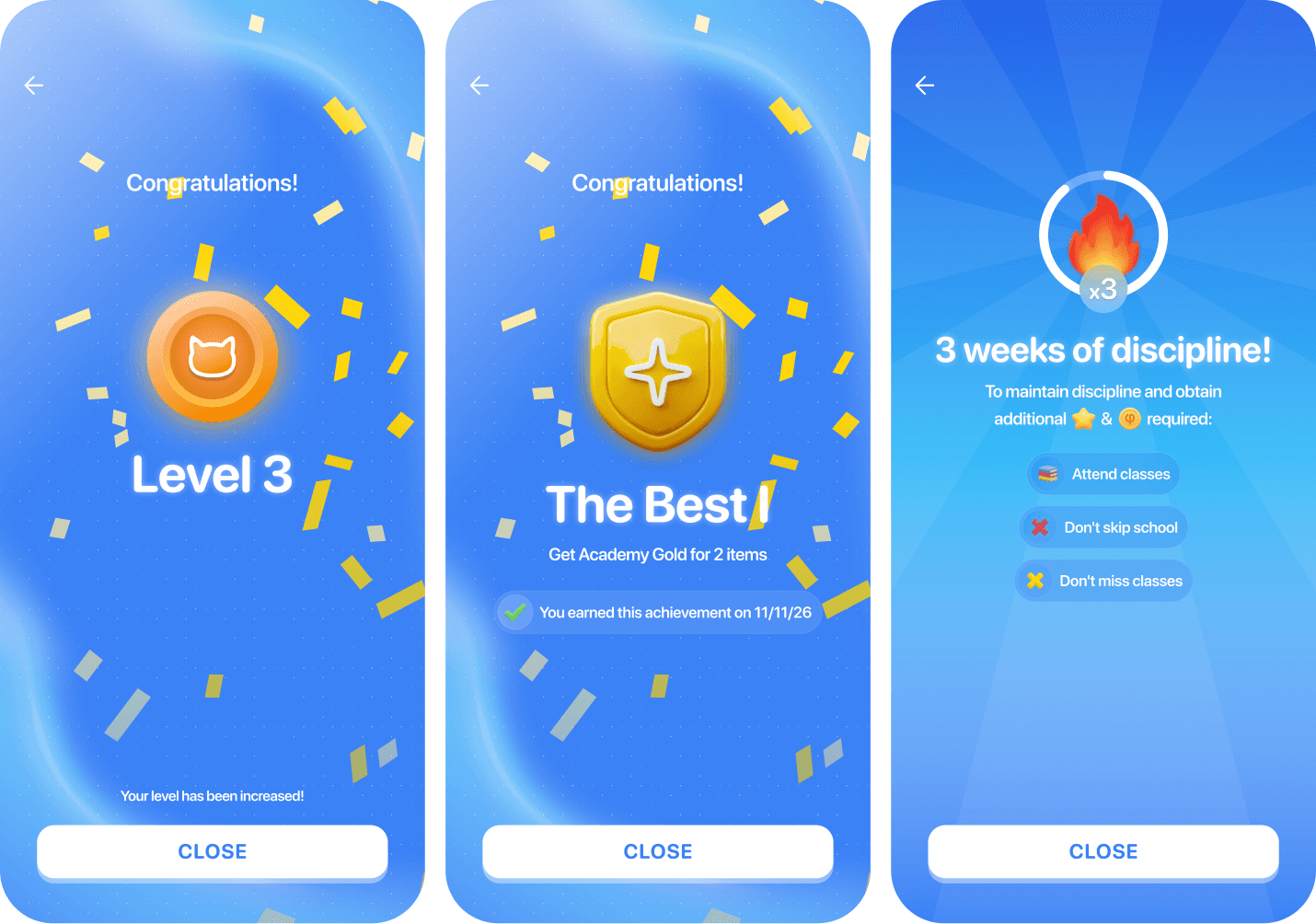
Reward moments are supported with celebratory overlays.
These overlays help turn progress into an emotional moment. When a child receives a reward or achievement, the product gives immediate positive feedback.
Design system
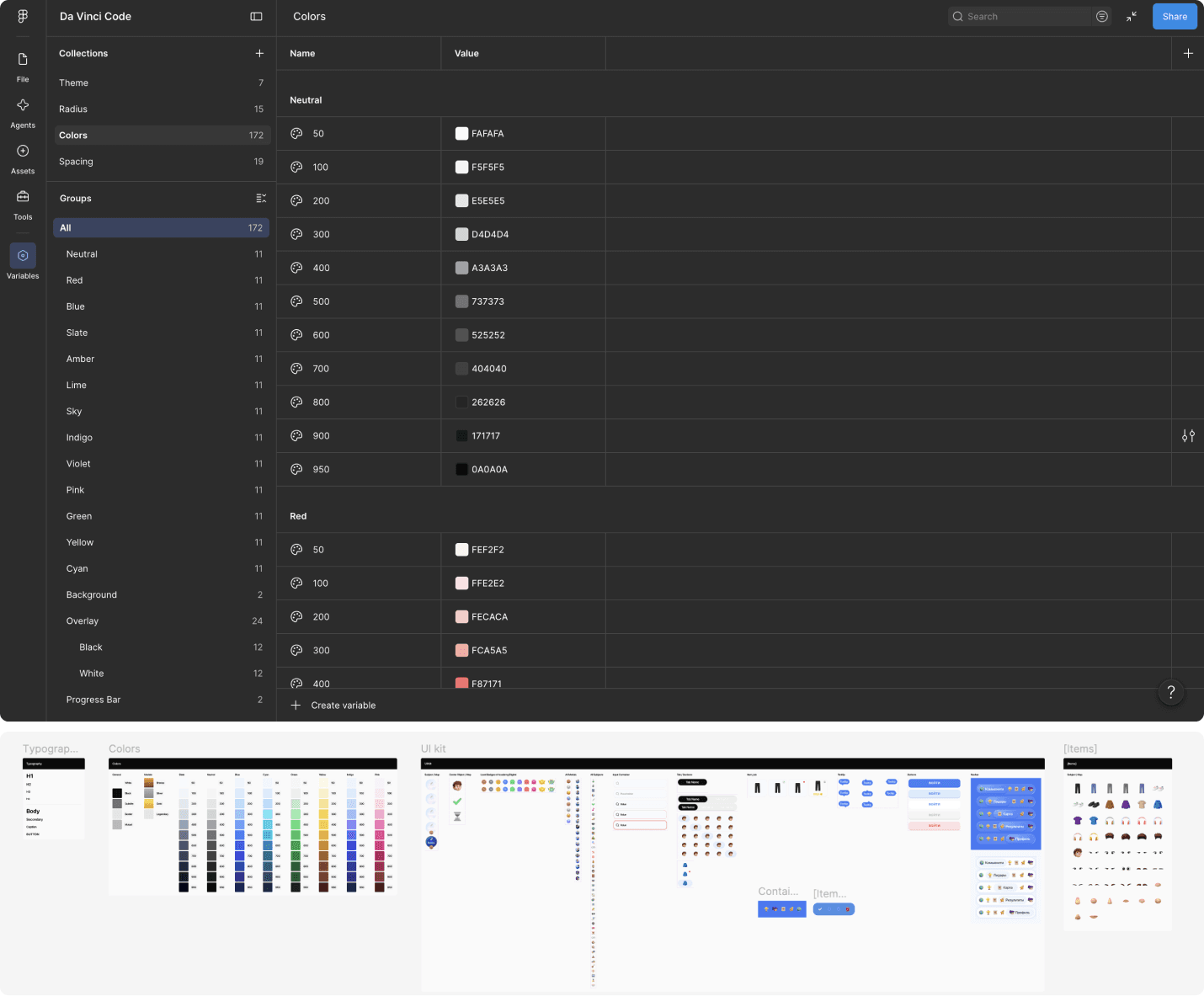
A dedicated UI kit was created for the product.
The visual style is bright, friendly, and soft, with a strong focus on character-driven engagement. The interface uses rounded cards, clear hierarchy, playful colors, and large visual elements to make the app understandable for children.
Success Metrics
The product increased motivation by turning educational progress into a clear, playful, and rewarding experience. In the first 8 weeks after launch, the strongest signals came from repeat engagement, higher learning activity completion, and active use of rewards and personalization features.
Weekly active students
68%Shows the app became part of students' weekly study routine and developed consistent repeat usage.
30-day retention
41%Indicates the experience sustained engagement beyond first-time curiosity and kept students returning.
Average sessions per week
4.2Reflects repeated interaction with progress, rewards, and learning-related flows throughout the week.
Progress map engagement
57%Validates that students actively tracked their learning journey and understood where they were progressing.
Completed learning activities
+24%Shows gamification improved real learning behavior, not only app visits or passive browsing.
Reward claim rate
73%Demonstrates that students noticed reward moments and actively responded to Florins and achievement feedback.
Avatar / room customization usage
46%Confirms that personalization features increased emotional ownership and made progress feel more personal.
Achievement unlock rate
52%Shows milestone-based motivation was meaningful and helped students connect effort with visible progress.
Weekly results screen views
61%Indicates students regularly reviewed outcomes and used the app to reflect on their weekly performance.
Notification open rate
19%Shows reminders and reward alerts were helpful enough to drive action without becoming overly intrusive.
Outcome
The final design created a full mobile product system for gamified education.
The project included both functional learning flows and emotional engagement layers: progress, rewards, characters, customization, achievements, and long-term results.
Da Vinci Code became a product concept where learning is not presented as pressure, but as a personal journey with visible growth and meaningful rewards.
Reflection
This project helped me work at the intersection of education, motivation, and product design.
The main design challenge was balancing playfulness with clarity. The product needed to feel fun for children, but still structured enough to support real educational progress.
The biggest learning was that gamification works best when it is connected to meaningful behavior. Rewards should not distract from learning. They should make progress more visible, more understandable, and more motivating.